
Fatigue can be a significant symptom for those with POTS and other comorbidities such as EDS and ME/CFS. Using a manual wheelchair can be draining and increases strain on upper extremity muscles and joints. Even though lightweight wheelchairs are more efficient in the energy it takes to propel them, sometimes assistance is needed, especially for longer distances and inclines. It can be helpful to use a power assist device on a manual wheelchair to conserve energy for other tasks and increase independence. The increased speed with power assist over manual propulsion aids in getting places faster and more efficiently. It is important to note that there is a significant cost for the attachment, which does need to be considered.
Some of the benefits of a lightweight manual wheelchair with power assist include the overall weight and transportability compared to a powered wheel chair, as long as the person has the ability to self propel at times. Consulting with an occupational therapist (OT) can be helpful in determining which type would be best given the specific abilities and needs of the individual. An OT would also be helpful in training for usage as maneuvering, increasing/decreasing speed, and stopping can take some practice to learn.
Power assist devices are add-on motorized products that help propel the wheelchair. They can be very helpful in parking lots, college/school campuses, hospitals, medical facilities, paved park trails, stores (if not too congested), entertainment venues, etc. The biggest benefit is that they can significantly reduce the number of pushes and therefore the energy expended. They aren’t as helpful in smaller environments such as homes or apartments, or congested areas when frequently having to start and stop. All options preserve the ability to self-propel, maintaining the manual wheelchair’s use in small or congested spaces. There are three types of power assist devices for manual wheelchairs. All can be easily attached and detached and use rechargeable batteries. Some can travel up to 12 miles before needing recharged. Top speed also varies among products.
Rear attachments have a single wheel with enclosed motor that attaches to the axle and extends out the back. Speed is adjusted with a wired switch and some can be controlled with a smartwatch. The user still needs to steer the wheelchair by having hands on the wheels. The motor, approximately 14lbs, is removable to allow the wheelchair to fold and to recharge the battery.
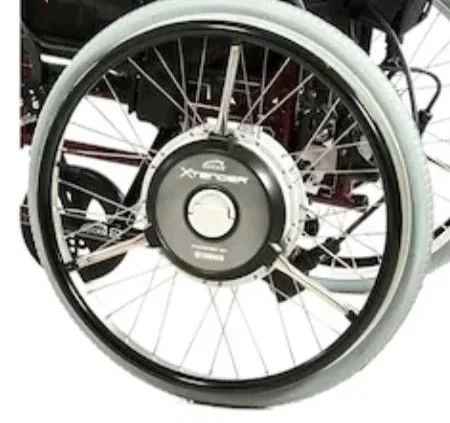
Wheel mounted assist are special wheels with motors on each one that allows for more distance with each push, reducing the effort to propel. This does add additional weight to each wheel, sometimes up to 22lbs each. Wheels often need to be removed to transport or recharge the batteries.
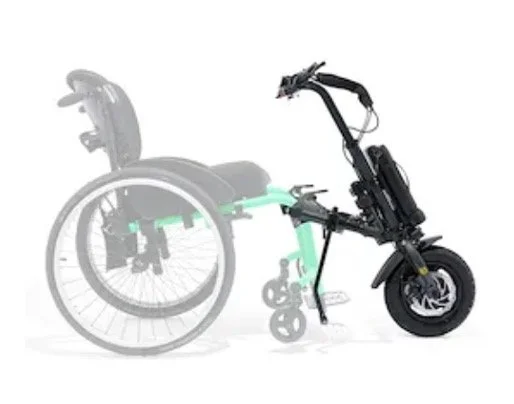
Front mounted power assist combines the motor and steering in one attachment to the front of the wheelchair. It handles rugged terrain and works well outdoors. It does add additional length, making smaller locations more difficult to navigate. This attachment can weigh 20lbs or more.
Power Assist
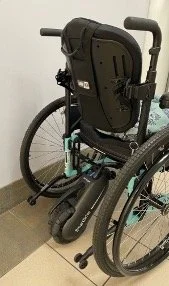
An example of a wheelchair with an attached power assist device.
Written by: Jennifer Dochod, MS OTR/L, Advisor